Keep moving
Medical taping in Eindhoven
Medical taping uses elastic (kinesio) or rigid tape to support muscles and joints without limiting your movement. The tape reduces pain, improves circulation and gives your body feedback about posture and movement. We use it for ankle sprains, knee complaints, shoulder problems and as support during your return to sport. Taping is always part of a broader treatment plan, never the whole solution. No referral needed.

Support without blocking
kinesio tape moves with you; rigid tape protects exactly where needed.
Immediate difference
we test the taped movement before you leave the practice.
Part of the plan
tape supports the recovery your training and treatment build.
What is medical taping?
Medical taping uses elastic (kinesio) or rigid tape to support muscles and joints without limiting your movement. The tape reduces pain, improves circulation and gives your body feedback about posture and movement. We use it for ankle sprains, knee complaints, shoulder problems and as support during your return to sport. Taping is always part of a broader treatment plan, never the whole solution.
Who is it for?
- Support for a recovering ankle, knee or shoulder
- Athletes returning to sport after an injury
- Swelling or bruising that needs better drainage
- Posture support for neck and shoulder complaints

For which complaints do we use medical taping?
Ankle & knee
- A freshly sprained ankle that needs protection.
- Kneecap complaints during sport.
- Support during return to sport after injury.
Shoulder & posture
- Shoulder unloading during recovery.
- Posture feedback for desk workers.
- AC-joint support after a fall.
Wrist, elbow & hand
- Tennis elbow unloading during work.
- Wrist support in gym and racket sports.
- Thumb taping with De Quervain.
Swelling & bruising
- Drainage taping after a sprain.
- Bruises from impact during sport.
- Post-surgery swelling, in consultation.

When to book medical taping?
Wondering whether it is 'bad enough' for the physio? In these situations an appointment is worthwhile, no referral needed:
- Persistent pain or stiffness: that does not clearly improve after one to two weeks of taking it easy (walking, moving, short breaks).
- Recurring complaints: with work or sport, for example neck pain after screen days, a shoulder that protests when reaching, or a calf that keeps seizing up when running.
- Restricted movement: something that used to work no longer does: reaching overhead, bending, turning, stairs.
- Recovery after an injury or surgery: you want to rebuild strength and load capacity safely and prevent a relapse.
How we apply medical taping
We start with a short intake about your complaints and goals, in plain English. We look at your load and recovery (work, sport, sleep, stress), test which movements provoke your complaint, and decide together whether this treatment adds value for you. You get a clear explanation and a concrete plan for the first weeks, and treatment starts the same appointment.
Kinesio tape or rigid tape?
The colourful elastic tape you see on athletes is kinesio tape: it moves with you, reduces pain signals and supports circulation, ideal for muscle complaints and swelling.
Rigid (sports) tape is stiffer and deliberately blocks one direction of movement. We use it to protect a freshly sprained ankle or an unstable joint during sport. Both techniques are applied by our certified therapists and combined with exercises for lasting recovery.
What can tape realistically do?
Honestly: tape is support, not therapy. What it does well is reduce pain during movement, protect a healing ligament in sport, improve drainage of swelling, and remind your body of a better posture. Patients typically feel that difference the moment we test the taped movement.
What tape cannot do is fix the underlying problem. That is the job of the training and treatment around it, which is why taping at our practice always comes embedded in a plan, and why we teach you self-taping when your sport needs it regularly.
Costs and insurance
Taping happens within a regular physiotherapy session, no separate costs. Physiotherapy is covered by your supplementary (aanvullende) insurance, depending on your policy, and it never touches your deductible (eigen risico). Many expat and international insurance plans cover physiotherapy as well. Bring your insurance details to the first appointment and we check your coverage together, before any costs surprise you.
Adults (18+)
- Sessions are reimbursed from your supplementary (aanvullende) insurance, the number depends on your policy.
- For chronic conditions on the official list, the basic insurance covers from session 21 onwards (sessions 1–20 via supplementary insurance or self-paid); a doctor's referral is required for chronic status.
- Physiotherapy never counts towards your deductible (eigen risico), except basic-insurance COPD care.
Children up to 17
- With a chronic indication, physiotherapy is covered from the very first session by the basic insurance.
Preparation and aftercare
What to bring
- ID (first appointment) and your insurance details
- Clothes you can move in, think shorts or sports gear for hip and knee complaints
- A short history of your complaint: when it started, what worsens it, what eases it
- Any medical information: referral letter, scans or earlier reports, if you have them
- No special preparation needed, a water bottle is always a good idea
After the treatment
- Kinesio tape stays on three to five days, showering is fine, pat it dry
- Itching under the tape that gets worse means: remove it and let us know
- Remove tape gently in the direction of hair growth, ideally after a warm shower
- Tape is support: keep doing the exercises that fix the underlying problem
Frequently asked questions about medical taping
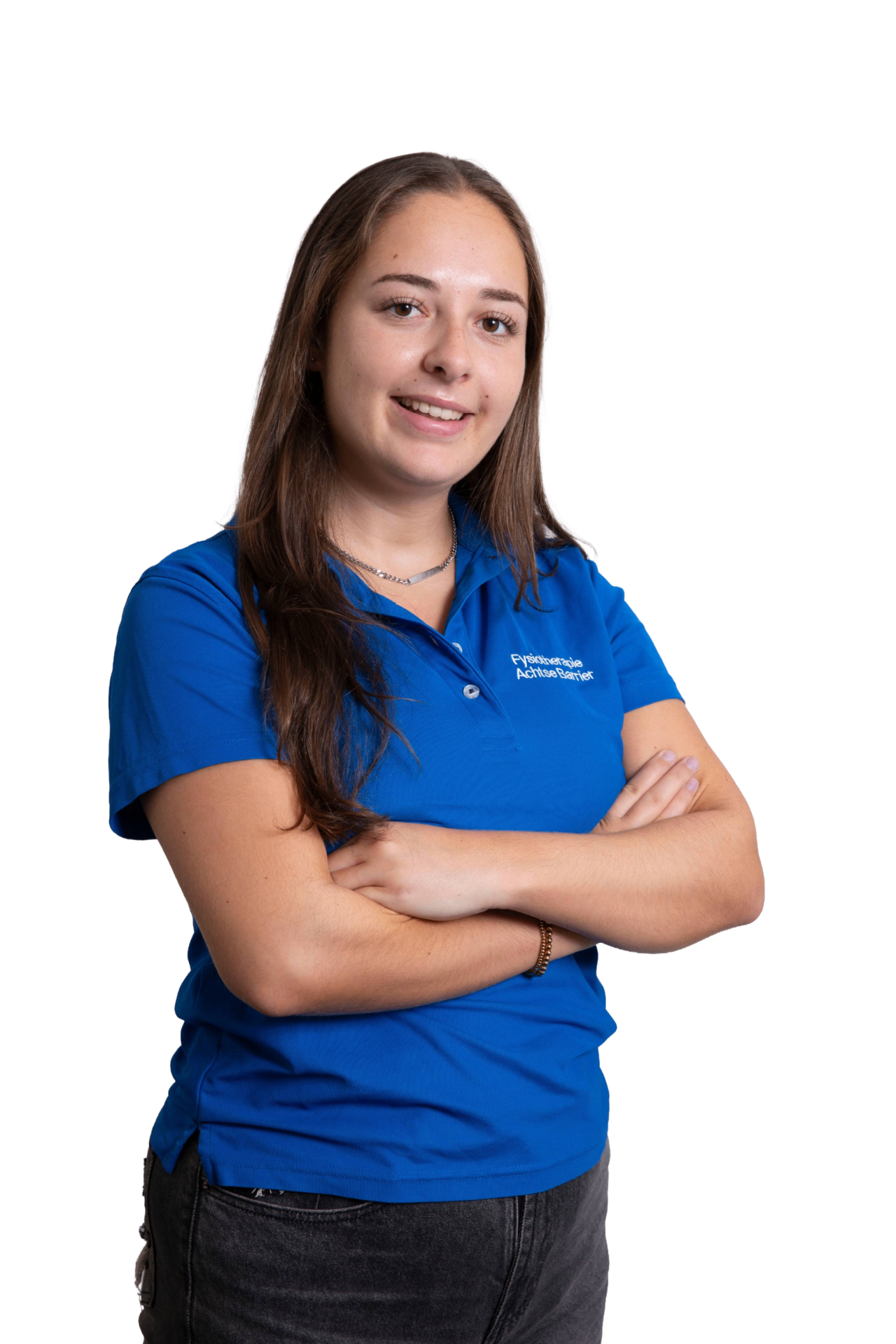
Book your appointment with Bo
Plan your appointment with Bo Treffers or one of our other medical taping therapists. No referral needed, and we can usually plan you in within one working day.
Call 040-3400224 or email [email protected]. Locations at Philitelaan 59A, Fransebaan 584 and Artoislaan 6A.
Locations
Three locations in Eindhoven
Visit us in the heart of Eindhoven's creative and tech district, or at one of our two practices in the north of the city. Every location offers English-speaking care.
Strijp-S
Fysiotherapie Strijp-S
In Eindhoven's creative and tech district, on walking distance from the station. Easy to reach from the city centre, ASML in Veldhoven and TU/e.
Address
Philitelaan 59 A
5617 AK Eindhoven
Opening hours
Monday to Friday
08:00 – 20:00
Phone
040-3400224
Achtse Barrier · Fransebaan
Fysiotherapie Achtse Barrier
Our main Achtse Barrier practice in the north of Eindhoven (Woensel), with evening opening hours and easy parking at the door.
Address
Fransebaan 584
5627 RE Eindhoven
Opening hours
Mon–Thu 08:00 – 21:00
Fri 08:00 – 17:00
Phone
040-2424464
Achtse Barrier · Artoislaan
Fysiotherapie Achtse Barrier
Our second Achtse Barrier location, around the corner on the Artoislaan, close to Blixembosch and the A50.
Address
Artoislaan 6 A
5627 JB Eindhoven
Opening hours
Mon–Thu 08:00 – 17:30
Friday closed
Phone
040-2424464
Ready to book your first appointment?
No referral needed. Usually seen within one working day, at any of our three locations in Eindhoven.