Keep moving
Manual therapy in Eindhoven
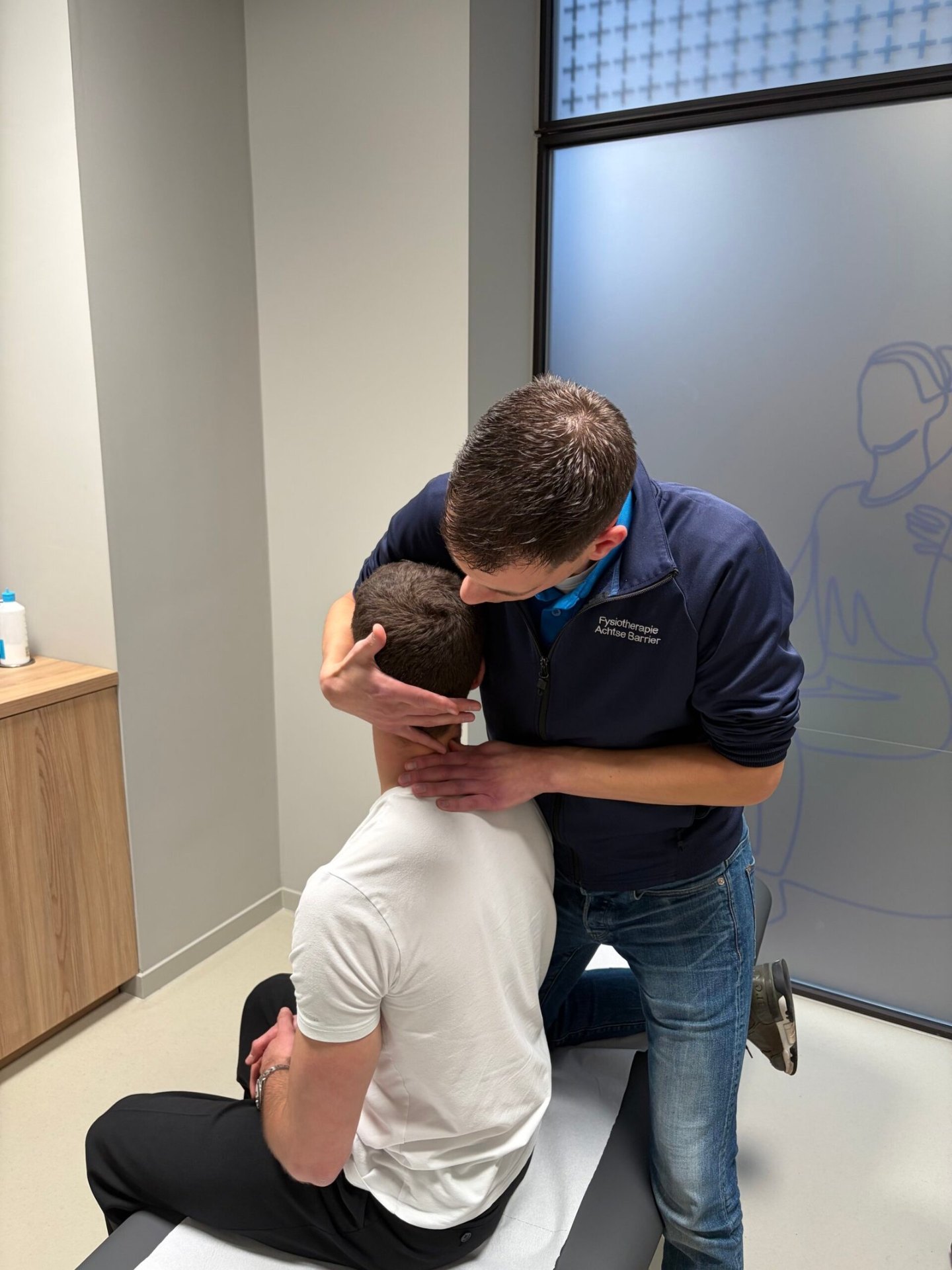
Manual therapy is a specialisation within physiotherapy that focuses on the joints of the spine and limbs. Using precise mobilisation and manipulation techniques, your manual therapist restores movement in stiff joints, which reduces pain and improves posture. A manual therapist completed a multi-year Master's degree on top of the physiotherapy bachelor, focused entirely on the spine and joints. No referral needed.

Freer movement, often immediately
precise mobilisation of stiff joints in neck, back and shoulders.
Master-level expertise
treated by a manual therapist with a dedicated Master's degree in the spine.
Results that hold
joint treatment always combined with stability training and posture coaching.
What is manual therapy?
Manual therapy is a specialisation within physiotherapy that focuses on the joints of the spine and limbs. Using precise mobilisation and manipulation techniques, your manual therapist restores movement in stiff joints, which reduces pain and improves posture. A manual therapist completed a multi-year Master's degree on top of the physiotherapy bachelor, focused entirely on the spine and joints.
Who is it for?
- Neck pain and stiffness, with or without headaches
- Lower back pain, including sciatica-type radiating pain
- Shoulder complaints such as frozen shoulder
- Dizziness related to the neck (cervicogenic)

For which complaints do we use manual therapy?
Neck & headaches
- Stiff, painful neck after screen days.
- Headaches creeping from the back of the head forward (cervicogenic).
- Neck-related dizziness, including BPPV.
Lower back
- Lower back pain and morning stiffness.
- Sciatica-type pain radiating into buttock or leg.
- A back that 'locks up' with certain movements.
Shoulder
- Frozen shoulder with pronounced stiffness.
- Shoulder pain with a stiff upper back and shoulder blade.
- Pain that turns out to come from the neck.
Jaw & thorax
- Jaw complaints where the neck plays a role.
- A stiff mid-back that limits breathing and rotation.
- Rib and breastbone-related pain after checking with a doctor.
When to book manual therapy?
Wondering whether it is 'bad enough' for the physio? In these situations an appointment is worthwhile, no referral needed:
- Persistent pain or stiffness: that does not clearly improve after one to two weeks of taking it easy (walking, moving, short breaks).
- Recurring complaints: with work or sport, for example neck pain after screen days, a shoulder that protests when reaching, or a calf that keeps seizing up when running.
- Restricted movement: something that used to work no longer does: reaching overhead, bending, turning, stairs.
- Recovery after an injury or surgery: you want to rebuild strength and load capacity safely and prevent a relapse.
What happens during manual therapy?
We start with a short intake about your complaints and goals, in plain English. We look at your load and recovery (work, sport, sleep, stress), test which movements provoke your complaint, and decide together whether this treatment adds value for you. You get a clear explanation and a concrete plan for the first weeks, and treatment starts the same appointment.
Manual therapy for neck pain and headaches
Neck pain with headaches is one of the most common complaints among internationals in Eindhoven, often driven by long days at a screen. Many of these headaches start in the upper neck joints, known as cervicogenic headache.
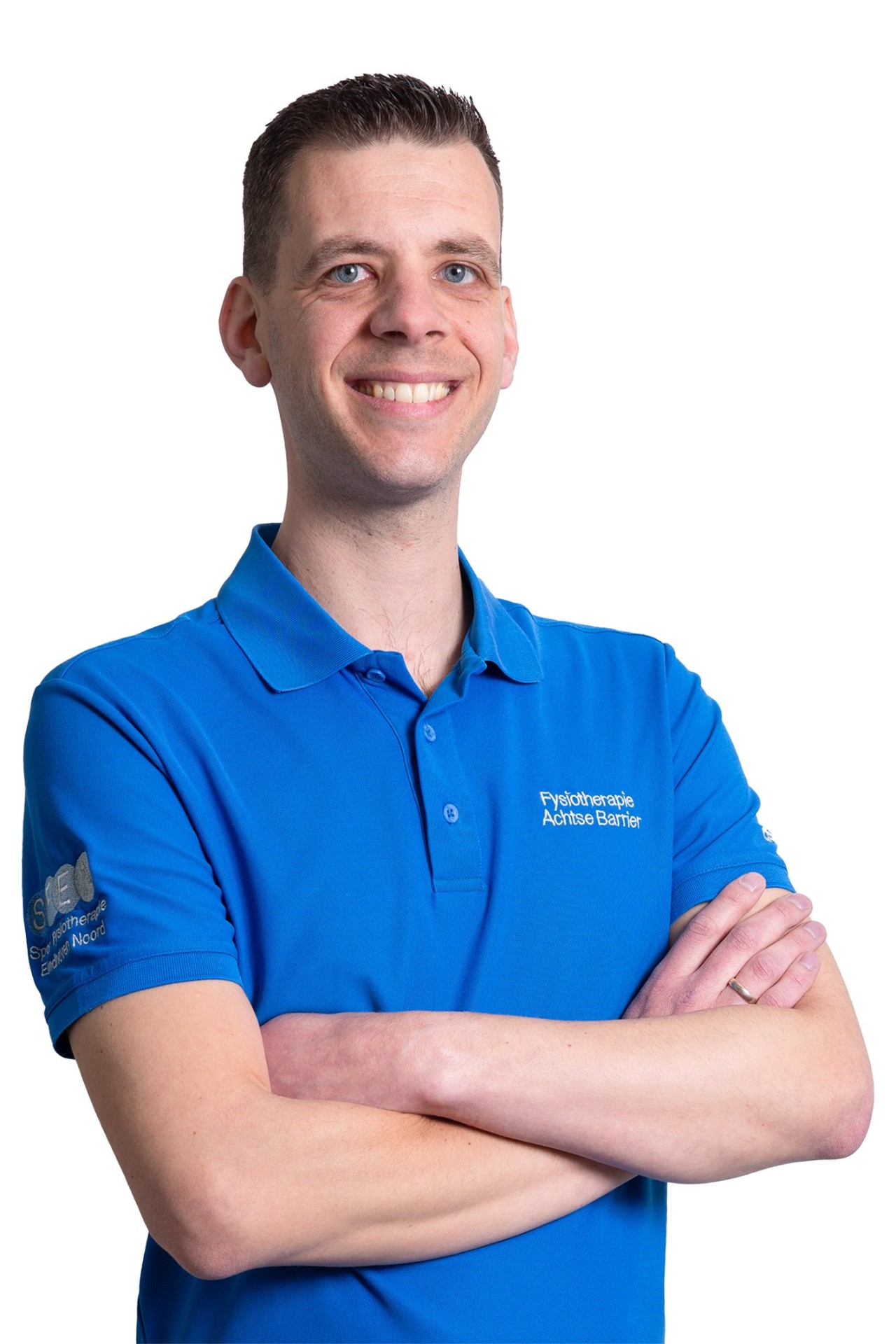
Our manual therapist Wouter Oomen completed a Master's degree in manual therapy and has extensive experience with neck complaints, whiplash and dizziness. He combines joint treatment with exercises, so relief lasts beyond the treatment table.
What results can you expect?
Restored joint movement is often noticeable immediately: patients turn their head further, bend deeper or breathe more freely directly after the first session. Pain reduction follows over days as the surrounding muscles let go of their guarding.
Research supports manual therapy combined with exercise as one of the most effective approaches for neck pain, cervicogenic headache and lower back pain, and that combination is standard in every plan here: hands-on treatment for movement, training for keeping it.
Costs and insurance
Manual therapy has its own (higher) rate with Dutch insurers and is reimbursed from the same supplementary physiotherapy budget. Physiotherapy is covered by your supplementary (aanvullende) insurance, depending on your policy, and it never touches your deductible (eigen risico). Many expat and international insurance plans cover physiotherapy as well. Bring your insurance details to the first appointment and we check your coverage together, before any costs surprise you.
Adults (18+)
- Sessions are reimbursed from your supplementary (aanvullende) insurance, the number depends on your policy.
- For chronic conditions on the official list, the basic insurance covers from session 21 onwards (sessions 1–20 via supplementary insurance or self-paid); a doctor's referral is required for chronic status.
- Physiotherapy never counts towards your deductible (eigen risico), except basic-insurance COPD care.
Children up to 17
- With a chronic indication, physiotherapy is covered from the very first session by the basic insurance.
Preparation and aftercare
What to bring
- ID (first appointment) and your insurance details
- Clothes you can move in, think shorts or sports gear for hip and knee complaints
- A short history of your complaint: when it started, what worsens it, what eases it
- Any medical information: referral letter, scans or earlier reports, if you have them
- No special preparation needed, a water bottle is always a good idea
After the treatment
- Mild muscle soreness or a 'worked on' feeling for a day is normal after mobilisation
- Keep the treated area moving gently, that is what holds the new range
- Do the stability exercises from your plan, they anchor the result
- Heat helps if the muscles around the joint feel tense afterwards
Frequently asked questions about manual therapy
Book your appointment with Wouter
Plan your appointment with Wouter Oomen. No referral needed, and we can usually plan you in within one working day.
Call 040-3400224 or email [email protected]. Locations at Philitelaan 59A, Fransebaan 584 and Artoislaan 6A.
Locations
Three locations in Eindhoven
Visit us in the heart of Eindhoven's creative and tech district, or at one of our two practices in the north of the city. Every location offers English-speaking care.
Strijp-S
Fysiotherapie Strijp-S
In Eindhoven's creative and tech district, on walking distance from the station. Easy to reach from the city centre, ASML in Veldhoven and TU/e.
Address
Philitelaan 59 A
5617 AK Eindhoven
Opening hours
Monday to Friday
08:00 – 20:00
Phone
040-3400224
Achtse Barrier · Fransebaan
Fysiotherapie Achtse Barrier
Our main Achtse Barrier practice in the north of Eindhoven (Woensel), with evening opening hours and easy parking at the door.
Address
Fransebaan 584
5627 RE Eindhoven
Opening hours
Mon–Thu 08:00 – 21:00
Fri 08:00 – 17:00
Phone
040-2424464
Achtse Barrier · Artoislaan
Fysiotherapie Achtse Barrier
Our second Achtse Barrier location, around the corner on the Artoislaan, close to Blixembosch and the A50.
Address
Artoislaan 6 A
5627 JB Eindhoven
Opening hours
Mon–Thu 08:00 – 17:30
Friday closed
Phone
040-2424464
Ready to book your first appointment?
No referral needed. Usually seen within one working day, at any of our three locations in Eindhoven.